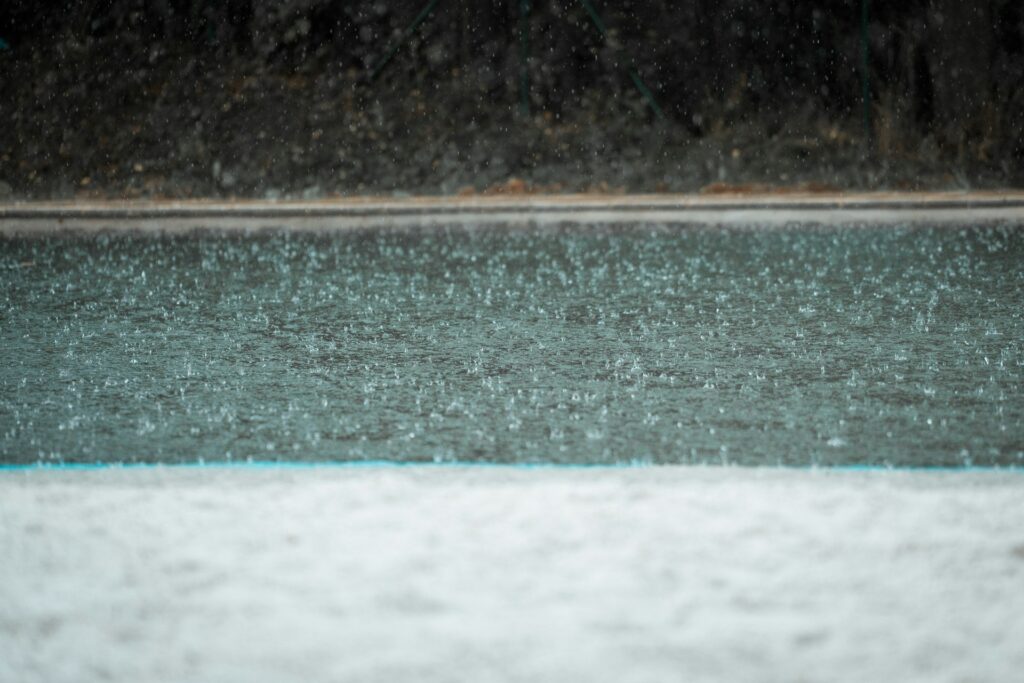
Late-spring and early-summer storms roll through Baton Rouge, Gonzales, and Alexandria fast. One big downpour can leave your pool full of leaves, cloudy water, and off-balance chemistry. If you are not ready for those stormy afternoons, your relaxing pool can turn into one more thing on your to-do list.
We want to help you keep that from happening. In this guide, we will talk about what heavy rain does to your pool water, how to care for skimmers and drains, and how to manage runoff and yard debris. With a few smart habits, plus a thoughtful pool design consultation in Baton Rouge, your fiberglass pool can stay clearer and safer, even in rainy season.
Protect Your Pool Investment During Baton Rouge Storms
Here in South Louisiana, storms bring more than just rain. Strong wind tosses oak leaves, pine needles, Spanish moss, and seed pods onto your deck and straight into your pool. All that extra debris puts stress on your skimmers, drains, and filter.
When rain hits hard and often, it can:
- Wash soil, mulch, and grass into the water
- Dilute your chlorine and other chemicals
- Clog baskets and slow down circulation
Pools that are not planned for our local weather can struggle every rainy season. Smart layout, good drainage, and strong circulation go a long way toward preventing problems before they start. That is why a thoughtful pool design consultation in Baton Rouge can be so helpful, especially if you are planning a new backyard or reworking an older one.
What Heavy Rain Does to Your Pool Water Chemistry
Rainwater is not just “free water” for your pool. It is usually low in minerals and can be slightly acidic. When a big storm hits, all that extra water can:
- Dilute your sanitizer so chlorine cannot keep up
- Push pH and alkalinity down
- Carry pollen, dust, and metals from roofs, trees, and yards
After a storm, many pool owners notice:
- Cloudy or green water
- Itchy skin or red eyes after swimming
- Slimy steps or walls
- Dull or stained fiberglass surfaces
This is why testing after storms matters so much. A simple at-home test kit is usually enough to keep tabs on:
- Chlorine
- pH
- Total alkalinity
- Calcium hardness
- Stabilizer, also called CYA
Keeping a small log of your readings helps you figure out patterns. You start to see how different types of storms affect your pool, so you can respond faster and with more confidence.
Post-Storm Chemistry Fixes for Clear, Safe Swimming
The first 24 hours after a big storm are important. Instead of guessing with chemicals, follow a calm, simple plan.
Right after the weather clears, focus on:
- Safety first; never work around the pool if there is lightning nearby
- Removing larger debris from the water surface and steps
- Emptying skimmer and pump baskets
- Running the pump continuously to move dirty water through the filter
Once the pool is cleared of big debris and the pump is running, then test the water. After many Louisiana storms, you will often need to:
- Raise pH and alkalinity with the right products
- Add a shock treatment to bring sanitizer back into range
- Use a clarifier or flocculant if the water looks hazy or dull
If you keep seeing the same problems after almost every storm, it is time to bring in a professional. Ongoing algae blooms, cloudy water that never seems to clear, or strange stains on your fiberglass shell can point to deeper issues with circulation, filtration, or water balance. A pool design consultation in Baton Rouge can also explore options like smarter circulation patterns and automation to make rainy-season care much easier.
Keeping Skimmers, Drains, and Equipment Flowing Freely
Heavy rain and wind fill your skimmers fast. When baskets are packed with leaves and seeds, your pump has to work harder, and your water does not move the way it should. That makes every other pool problem worse.
After every major storm, run through this quick checklist:
- Empty skimmer baskets and the pump basket
- Make sure skimmer weirs move freely and are not stuck by debris
- Look at main drain covers from the deck to check for trapped leaves
- Confirm your returns feel strong and steady, not weak or sputtering
A few safety and care tips help protect both you and your equipment:
- Never enter the water to clear a main drain
- Always shut off power before opening pump or filter lids
- Watch for odd sounds, leaks, or vibration around the equipment pad
Regular professional equipment inspections are very helpful in storm season. Pumps, filters, and valves all work harder when storms keep hitting, and catching wear early can prevent bigger issues later.
Managing Runoff, Yard Drainage, and Deck Debris
If your yard sends water toward the pool instead of away from it, storm care gets a lot harder. Poor grading and weak drainage let mulch, soil, and grass wash into the water. Fertilizers and other lawn products can also raise phosphates, which help algae grow.
Helpful steps include:
- Adjusting landscaping beds so they are slightly higher than the deck
- Adding or improving French drains and deck drains
- Choosing low-mess ground covers or rock borders near the pool
- Keeping gutters and downspouts aimed away from the pool deck
Good drainage planning is one of the biggest favors you can do for yourself. Working with a Latham fiberglass pool specialist for a pool design consultation in Baton Rouge lets you line up pool elevation, decking, and drainage from day one so every rainy season brings fewer chemistry and debris headaches.
Simple Rainy-Season Routines for Stress-Free Pool Days
Once storms become part of your weekly rhythm, it helps to have a simple checklist. A small routine keeps things from piling up and turning into bigger problems.
During stormy months, try to:
- Skim the surface and brush walls and steps weekly
- Empty skimmer and pump baskets often
- Backwash or clean filters as recommended
- Test water at least twice a week, more if storms are frequent
- Walk the deck and yard to look for erosion or standing water
Planning your care around the weather also makes a difference. Many owners like to:
- Increase pump run time during wetter weeks
- Save major chemical changes for drier days when possible
- Keep a basic “storm kit” with test strips, shock, clarifier, and spare baskets or cartridges
As you track what happens from late spring through early fall, patterns will show up. You will learn which types of storms hit your yard hardest and which small changes make the biggest difference. Over time, your rainy-season routine becomes simple and smooth, so you get more relaxed pool days, even when the clouds build up.
Get Started With Your Project Today
If you are ready to turn your backyard ideas into a detailed plan, we are here to help guide every step. Schedule your pool design consultation in Baton Rouge so we can discuss your vision, budget, and timeline in person. At Precision Pools & Outdoors, we take the time to understand how you want to use your outdoor space and tailor our recommendations to fit your lifestyle. Reach out today so we can start shaping a design that fits your home and how you live.